Rasan Blog

How to Extend the Lifespan of Faucets?

Increasing the lifespan of faucets is one of the most important aspects of maintaining building fixtures. Faucet failures not only raise repair and replacement costs, but can also cause damage to the internal plumbing system. Studies show that approximately 30–40% of faucet malfunctions in buildings occur due to scale buildup, worn-out O-rings, and improper usage. However, by following a few simple principles, it is possible to significantly extend the lifespan of faucets and even maintain their performance as if they were new.

In this article, with the aim of providing practical solutions for extending faucet lifespan, we first examine the most common issues affecting faucets and then introduce 10 scientific and practical methods for proper maintenance of building faucets.

Common Faucet Problems

Protecting faucets at home or in the workplace is neither difficult nor complicated. However, before discussing methods to increase the lifespan of faucets, it is essential to understand the most common problems they face. Identifying these issues helps us take a more precise and effective approach to faucet maintenance. Below, we review the most common faucet problems:
چکه کردن شیر و خرابی کارتریج

1. Scale Buildup in the Faucet Aerator

The accumulation of mineral deposits caused by water hardness inside the aerator leads to a reduction in water flow. This issue results in decreased water pressure, uneven spraying, and gradual damage to internal components. In areas with high water hardness, this problem can cause more severe damage to faucets over time.

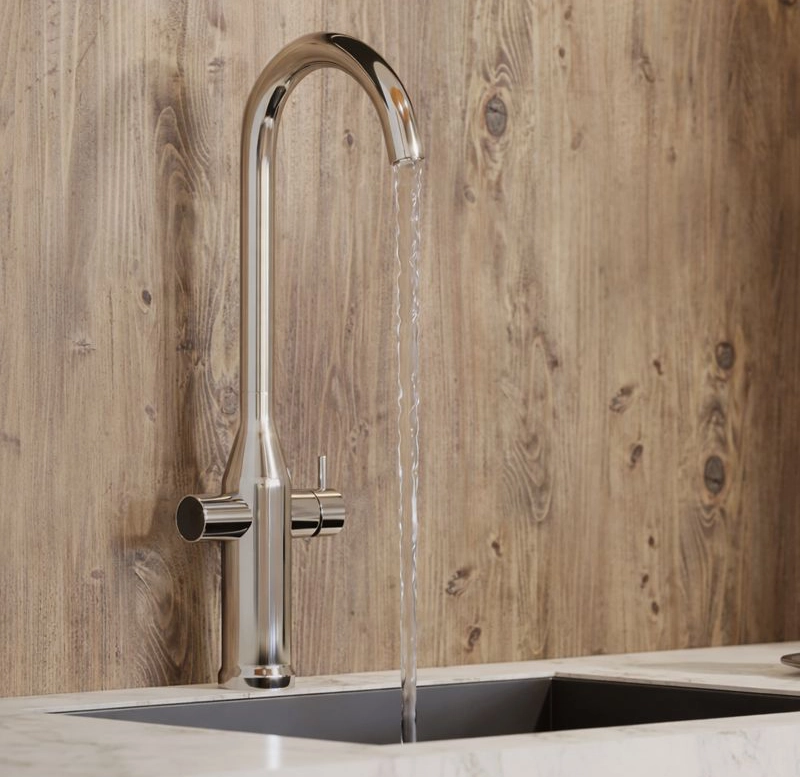
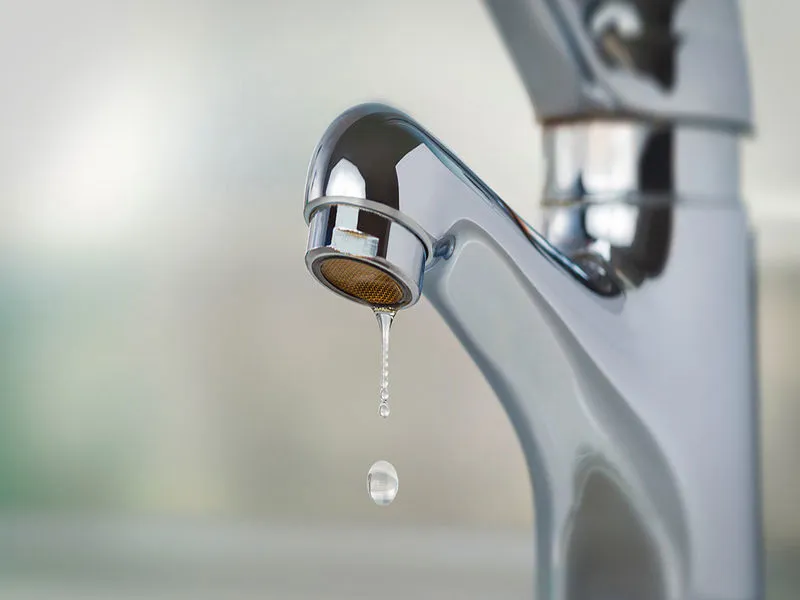
2. Faucet Dripping and Cartridge Failure

The cartridge is the main component responsible for controlling water flow, and its failure leads to leakage, dripping, and reduced accuracy in temperature control. Using hard water with high mineral content, forceful operation of the faucet, and sudden pressure shocks are among the primary causes of cartridge damage.
بررسی رایج‌ترین مشکلات شیرآلات

3. Discoloration and Stains on the Faucet Surface

This is one of the most common issues affecting all types of faucets. White and yellow stains are usually caused by limescale deposits, while brown stains may result from iron content in the water. Using inappropriate or harsh cleaning agents can also dull the faucet surface and damage its finish.

4. Stiff or Hard-to-Operate Handle

This issue is mainly caused by mineral deposits entering the cartridge or by dried and worn O-rings. If ignored, a stiff handle can eventually lead to cartridge cracking or failure.

5. Leakage from the Faucet Body or Hose Connections

Older faucets or models made with low-quality O-rings are more prone to leakage, whereas faucets with high manufacturing quality experience this problem far less frequently. Low-quality hoses may also crack over time, leading to water leaks.

6. Malfunction of Sensor and Smart Faucets

These faucets typically encounter problems due to sensor sulfation, battery failure, or scale buildup in the solenoid valve. Proper maintenance plays a crucial role in the performance of these models, and when issues occur, the exact cause should be accurately identified.
If you intend to buy built in faucets, click here.

Proper Faucet Maintenance Methods

Now that we are familiar with the main causes of faucet damage and malfunction, we can better focus on proper faucet maintenance methods. It is important to note that one of the most crucial factors in extending the lifespan of building faucets—alongside correct maintenance—is using high-quality products such as Rassan faucets. Below, we review 10 fully practical and proven methods to prevent faucet damage and extend their service life.

1. Regular and Proper Faucet Cleaning

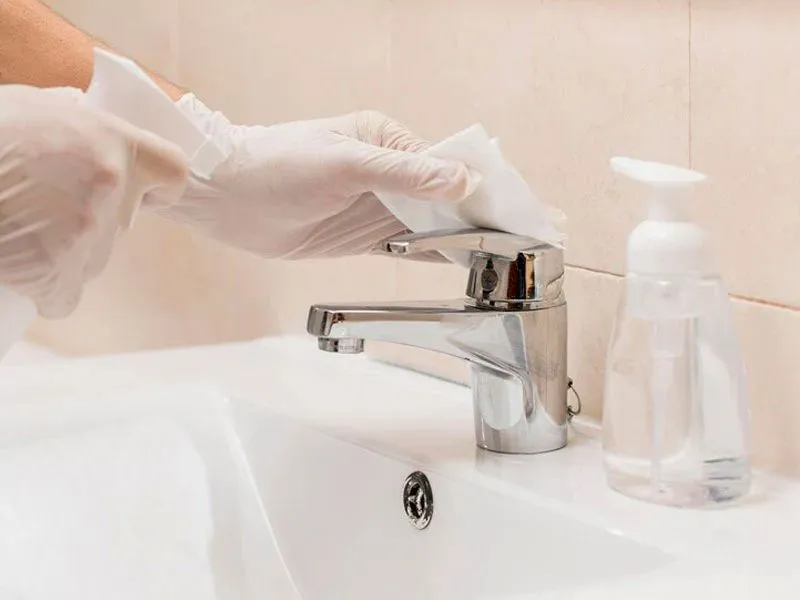
Weekly cleaning of faucets is one of the simplest yet most important ways to increase their lifespan. Every day, water droplets and bathroom steam remain on the faucet surface. These droplets contain limescale and mineral deposits which, if left untreated, first create white stains and eventually cause the entire surface to become dull.

For proper cleaning:

Use a soft microfiber cloth to prevent scratching the surface.

  • Mild, pH-neutral detergents are the best choice.
  • Never use steel wool or abrasive sponges, as they damage the nickel or chrome coating.
  • A mixture of warm water and a small amount of dishwashing liquid is ideal for daily cleaning.
  • Consistent and correct cleaning prevents mineral buildup and keeps faucets shiny and well-maintained for years.

2. Regular Descaling of the Aerator

As mentioned earlier, the aerator (faucet filter) is the first point where scale buildup occurs. A clogged aerator leads to reduced water pressure, uneven water flow, increased water consumption, and added stress on the cartridge.

For thorough descaling:

  • Remove the aerator.
  • Soak it in white vinegar for 30 minutes.
  • Gently remove deposits using a soft toothbrush.
  • Rinse thoroughly with warm water and reinstall.

In areas with hard water, descaling every 1 to 2 months is recommended. This process significantly extends cartridge lifespan and reduces pressure on internal components.

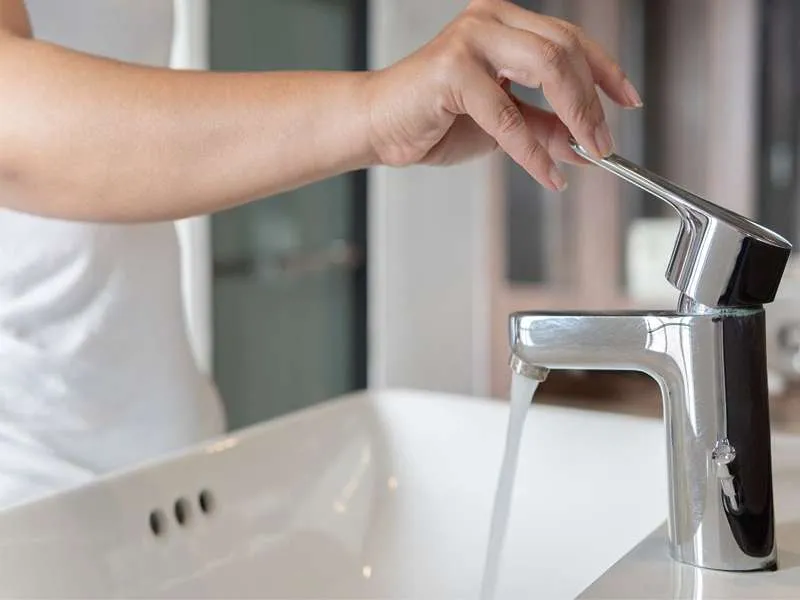
3. Using Anti-Scale Filters and Water Purification Systems

Hard water is one of the biggest enemies of faucets. Minerals such as calcium and magnesium precipitate faster at higher temperatures, forming scale that accumulates inside cartridges and internal waterways.

Therefore, using water filtration systems—especially at the main building inlet—has a major impact on extending faucet lifespan. Suitable filter types include:

  • Polypropylene (PP) filters for removing suspended particles
  • Carbon filters to reduce chlorine
  • Magnetic scale inhibitors to alter mineral crystal structure
  • Resin-based water softeners for areas with extremely hard water

The benefits of these filters include a 50–80% reduction in scale formation, which can double the lifespan of faucets, reduce the need for periodic servicing, and minimize wear on hoses and connections.
استفاده از فیلترهای رسوب‌گیر و تصفیه آب

4. Gently Operating the Faucet Handle or Lever

One of the most common mistakes is operating the faucet harshly, especially in single-lever models. This behavior puts excessive pressure on the cartridge and can lead to cracked ceramic discs, handle jamming, stiffness during operation, and faucet dripping.

For proper maintenance:

  • Raise the lever gently to the required position.
  • Avoid sudden force when closing the faucet.
  • Allow the water temperature to adjust gradually.

When caring for sensor faucets, it is also essential to strictly avoid hitting or striking the body or the sensor area.

5. Periodic Inspection of Hoses and Connections

Flexible connector hoses—especially those located under sinks—are often overlooked, yet they are exposed to pressure, temperature changes, and water quality issues. Over time, these hoses may crack, deteriorate, leak, or bulge.

To extend faucet lifespan:

  • Use braided stainless steel hoses.
  • Inspect connections every few months.
  • Replace hoses immediately if they become stiff, discolored, or damaged.
  • Non-standard hoses can lead to costly water leaks.

6. Avoid Using Acidic or Bleaching Cleaners

Acidic cleaners such as strong descalers, bleach, and chlorine-based products can seriously damage faucet finishes. The consequences of using such substances include surface dullness, permanent stains, peeling of the plating, reduced moisture resistance, and a shortened faucet lifespan.

Safe cleaning solutions include:

  • Using cleaners specifically designed for faucets
  • A mixture of water and dishwashing liquid
  • Alcohol for removing greasy stains
  • Drying the faucet thoroughly after cleaning

Proper care and attention during cleaning significantly extend faucet lifespan and help keep them free from discoloration or scratches for many years.

عدم استفاده از شوینده‌های اسیدی یا سفیدکننده‌ها

7. Preventing Water Hammer

Water hammer is a serious plumbing issue that causes severe jolts in pipes and damages faucets. This problem occurs when water suddenly stops moving inside the pipe. Experts usually identify water hammer by symptoms such as banging noises when opening or closing faucets, pipe vibrations, cartridge damage, and cracked fittings. To prevent this issue, the following measures are recommended:

  • Install pipe arrestors or air cushions
  • Control the building’s water inlet pressure
  • Install pressure-reducing valves in older buildings

Implementing these measures can reduce the likelihood of internal faucet damage by up to 70% and help extend the lifespan of faucets.
جلوگیری از ضربه فشار آب

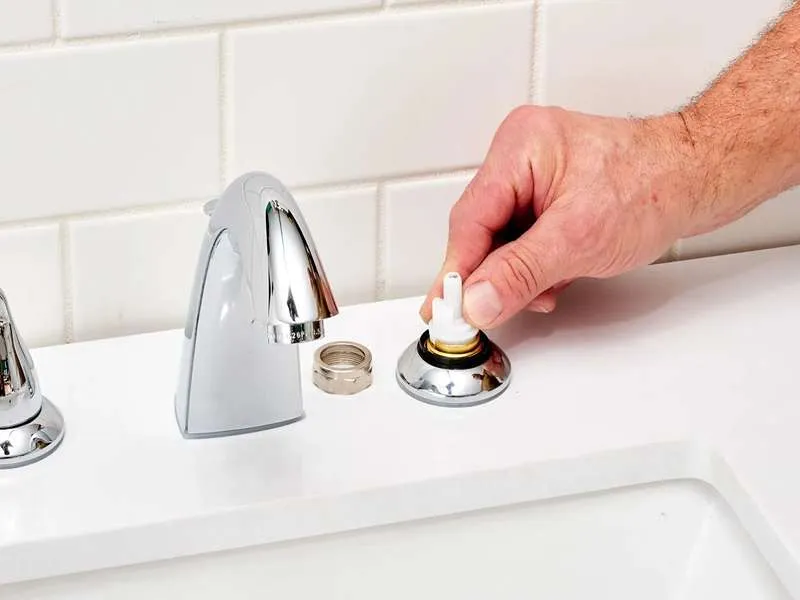
8. Annual Servicing of Cartridge and O-Rings

As mentioned, the cartridge is the heart of a lever faucet. Neglecting its maintenance can cause faucet leaks, stiff handles, irregular water flow, and damage to ceramic plates. For annual cartridge servicing, follow these steps:

  • Remove the cartridge
  • Clean it with a mild descaling solution
  • Lubricate the O-rings with special silicone grease
  • Check for internal leaks

If the cartridge is cracked, it must be replaced. Using an original cartridge significantly contributes to extending the faucet’s lifespan.

9. Drying the Faucet Body After Each Use

Drying the faucet body, especially in bathrooms, is one of the simplest yet most effective ways to maintain faucets and prevent limescale buildup. Water droplets left on the surface evaporate and leave mineral deposits. This practice:

  • Keeps the faucet looking shiny
  • Prevents white stains
  • Extends the lifespan of the finish
  • Reduces the need for descaling

The best method is to use a soft cloth or small towel after each use or at least once a day.

10. Protection Against Freezing in Winter

When water freezes, its volume increases by 9%, generating pressures exceeding 200 bar, which can crack the brass body of faucets. To prevent damage in cold climates and winter:

Insulate outdoor and rooftop faucets with fiberglass or foam pipe insulation

During very cold nights, leave the faucet slightly open to allow water to drip

Ensure proper faucet installation from the start, as incorrect installation creates permanent stress on the body

Always use original parts during repairs; counterfeit parts generally have shorter lifespans and poor performance

Finally, the quality of faucet construction plays a critical role in its durability. Faucets like Rassan products, with high-quality ceramic cartridges meeting ASTM standards, can perform flawlessly up to 500,000 times.

Click here to buy Rassan kitchen faucets.

Practical Tips to Prevent Limescale

Before listing practical tips, it’s important to know that limescale is the main cause of reduced water pressure and internal component damage. Limescale is the accumulation of minerals such as calcium and magnesium on the internal and external surfaces of faucets, which gradually disrupts their function. Here are some key tips to prevent limescale and extend faucet life:

  • Use a sediment filter at the building’s water inlet
  • Regularly descale the aerator
  • Use white vinegar for descaling
  • Dry the faucet body after use
  • Use faucets with nano-coated, scale-resistant surfaces
نکات کاربردی برای جلوگیری از رسوب

These measures have been specifically proven to prevent up to 50% of limescale buildup. The table below compares five common methods for preventing limescale in faucets:

Method Limescale Reduction Effective Lifespan Ease of Installation Overall Effectiveness
Mechanical inlet filter 30–40% 1–2 years Easy Good
Polyphosphate water softener 60–75% 6–12 months Medium Excellent
Magnetic water softener 40–60% Permanent Easy Good
RO Water Purifier 95%+ 10–15 years Requires technician Excellent (whole house)
Monthly chemical descaler 50–70% Very easy Medium

Final Recommendation: For most Iranian households, a combination of “mechanical filter + polyphosphate water softener” offers the best cost-to-performance ratio.

Conclusion

Extending the lifespan of faucets requires observing a few simple but important practices. Regular cleaning, preventing limescale, using appropriate filters, and periodic servicing can significantly increase faucet life and reduce repair and replacement costs. Awareness of common issues and choosing reputable brands also play a crucial role in proper maintenance. By following these guidelines, faucets will remain healthy, clean, and fully functional, just like the first day.


An Honor to Serve: Inauguration of Rassan Charitable Educational Complex in Pakdasht

A Lasting Commitment from the Rassan Group to Develop Educational Infrastructure and Train the Next Generation of Specialists

Rassan: A Pioneer in Educational Social Responsibility (CSR)

The Rassan Manufacturing and Industrial Group, far beyond its role in the nation’s industry, is deeply committed to its social responsibilities towards the community. With the firm belief that “the future of every land lies in the knowledge and expertise of its young generation,” Rassan prioritized the development of educational infrastructure, especially in underserved areas. Pakdasht County, facing population density and a shortage of standard educational facilities, particularly in the technical and vocational high school sector, required special attention. Consequently, Rassan was honored to initiate the construction project of the “Rassan Charitable Educational Complex” with the sincere participation of the Marjani family and the support of local authorities, completing it to the highest quality standards.

راسان؛ پیشگام در مسئولیت اجتماعی آموزشی

Official Confirmation on the Necessity of a Vocational School in the Industrial Town 

The magnificent inauguration ceremony of the Rassan Educational Complex was held with the prominent presence of senior provincial and local officials, alongside a large crowd of kind-hearted people from the region. The event was officially graced by the presence of Mr. Mohammad Sadegh Motamedian (then-Governor of Tehran), the Marjani brothers (Rassan Group Directors and Philanthropists), and Mr. Mohammad Hassani (Head of Pakdasht Education Department).

During the ceremony, the Governor of Tehran praised the valuable initiative of the Rassan Group and highlighted the necessity of such facilities near industrial zones:

“…This initiative was undertaken, and they managed to establish this vocational school in this industrial town in the shortest possible time. This can prevent many of the dropouts that used to occur in this town and will raise specialized human resources.”

The symbolic ribbon-cutting moment by the CEO and officials marked the beginning of a new chapter in technical and vocational education in Pakdasht.

تأیید مقامات بر لزوم احداث هنرستان در شهرک صنعتی

Facts and Figures: A Look at the Blueprint and Infrastructure

The Rassan Vocational School is not just a building; it is a fully equipped and standardized complex for educating the next generation. The technical specifications of this project are as follows:

 
IndexSpecification
Total Land Area3024 square meters
Building Infrastructure2150 square meters
Number of Classrooms12 newly-built classrooms
Administrative Spaces4 administrative rooms
Specialized FacilitiesOne equipped laboratory and workshop (e.g., Metal Industries Workshop)
Other AmenitiesPrayer room (Namāzkhāneh), Library, Multi-purpose hall, and sports yard

All spaces, from the well-lit, standardized corridors to the classrooms equipped with modern gear, have been designed and completed with the goal of creating an effective and joyful learning environment for students.

آمار و ارقام: نگاهی به نقشه و زیرساخت‌ها

Photo Gallery of Rassan Charitable Educational Complex

Heartfelt Message: The Philanthropic Motivation of the Rassan Family

Hassan Marjani, CEO of the Rassan Group:

“Everything we have is thanks to the blessing of education and hard work. Therefore, we felt it was our duty to pass this goodness and blessing onto the next generation. My brothers and I decided to build this school so that the children of this land could peacefully acquire knowledge and expertise in a worthy environment. This project demonstrates Rassan Group’s commitment to the bright future of Iran.”


سخن دل: انگیزه‌ی نیکوکارانه‌ی خانواده‌ی راسان

A Dream Fulfilled: Pakdasht Education Department Appreciates Investment in Specialization

Mr. Mohammad Hassani, Head of the Pakdasht Education Department, spoke at the complex’s inauguration, sincerely thanking the Rassan Group for their noble endeavor and emphasizing that the construction of this vocational school was a “vital necessity” for the region. He stated that this project not only significantly addresses the problem of standard educational space shortages but, more importantly, by focusing on creating specialized workshops and technical classes, it has set the groundwork for direct investment in specialization and skill development for the region’s students. According to Mr. Hassani, this benevolent partnership promises to raise a generation of skilled specialists who will secure their professional future and meet the growing needs of industry and production in Pakdasht County.

یک ضرورت محقق شد: تقدیر آموزش و پرورش از سرمایه‌گذاری در تخصص‌آموزی

Hope for the Future: The Fruit of This Lasting Endeavor

This great movement was not just a construction project; it was the planting of the seed of hope in the hearts of thousands of future-making students. We, at the Rassan Group, deeply believe that every brick of this complex testifies to our commitment to production, expertise, and national development.

The fruit of this lasting effort will not be confined to the walls of the classrooms ; rather, in the near future, this vocational school will become a central hub for training skilled and specialized workforce who will meet the needs of the region’s industrial towns and drive the nation’s economy forward.

While expressing gratitude to all officials, managers, and local people who assisted us in this path, the Rassan Group declares that it will continue the path of Social Responsibility with vigor and will fulfill its share in building a developed and prosperous Iran through further steps.

.

Selected Photos from the Opening Ceremony of Rassan Technical School

What is PVD coating and why is it considered the best option for faucets?

When the term PVD coating is mentioned, many people immediately think of the beauty and wide range of colors it brings to faucets. Although this is completely true, the beauty of the faucets we use in kitchens or bathrooms is only part of the story. The main advantage of PVD coating compared to conventional plating lies in its durability, resistance to corrosion, scratches, and its ability to maintain the faucet’s shine over time. This becomes even more important in today’s modern interiors, where visual appeal is just as significant as quality and long lifespan.

One common mistake among faucet users is assuming that plating and PVD coating mean the same thing. However, PVD is a modern technology that, at Rassan, is applied as a final layer over nickel plating.

In this article, we will examine what PVD coating is, why it matters, what benefits it provides for faucets, and why brands such as Rassan use this advanced technology in their production.


What exactly is PVD coating?

PVD stands for Physical Vapor Deposition, which means the physical deposition of vapor. This technology is used in advanced industries such as aerospace, medical equipment, luxury watchmaking, and of course, faucet manufacturing. But why has it attracted so much attention?

In the PVD coating process, metals such as titanium or zirconium are vaporized in a vacuum and controlled environment. The vapor then bonds to the surface of the component with high energy, creating a very thin yet hard and durable layer. This layer is not only decorative—it alters the physical structure of the faucet’s surface, resulting in a remarkable improvement in its properties.


Why is PVD superior to electroplating?

Before the spread of PVD technology, electroplating was the most common method for coloring and protecting faucets. However, this method had several drawbacks: over time, faucets would become worn, corroded, or dull.
In contrast, PVD coating has several distinctive advantages:

  • High durability and resistance: The thin layer is extremely resistant to scratches, impacts, and corrosion.
  • Environmentally friendly: Unlike conventional plating, the PVD process produces no toxic wastewater.
  • Greater color variety: It allows the creation of modern and unique colors such as matte gold, rose gold, charcoal black, brushed nickel, and more.
  • Long-lasting shine: Even after years of use, the surface of PVD-coated faucets remains bright and like new.

That is why many reputable global brands in recent years have turned toward using this advanced technology.


Stages of the PVD coating process

Although the PVD coating process may seem complicated, it essentially includes several key steps:

Surface preparation: The faucet surface is carefully cleaned and degreased.
Creating vacuum: After placing the components inside the PVD chamber, a vacuum is created.
Metal vaporization: The desired metal or compound is vaporized under controlled conditions.
Deposition: The metallic particles are accelerated toward the surface and form the final coating layer.
Cooling and quality testing: Once finished, the products are inspected to confirm surface quality and uniformity.

This high level of precision and control makes the PVD coating process far more durable and reliable than many other coating methods such as electroplating.


The impact of PVD coating on interior design and decoration

Faucets play an important role in the beauty of kitchen and bathroom spaces. Today, besides functionality, their design and color also matter greatly. PVD technology has made it possible for interior designers to use a wide range of modern, durable colors—colors that were once either impossible or lacked sufficient durability.

For example, black is one of the most popular choices in modern design. Before PVD coating, this color would easily lose its appearance due to scratches or weak resistance. But with PVD coating, this issue has been solved, and black faucets can now be used confidently in kitchens or bathrooms without worrying about color fading or surface damage.


Lasting beauty: an advantage beyond appearance

As mentioned at the beginning, one of the most important features of PVD coating is that it not only creates a beautiful appearance but also ensures that this beauty lasts.
Faucets coated with PVD are resistant not only to moisture and cleaning agents but also to abrasion and impact.

This durability allows PVD-coated products to remain as good as new for many years—a quality highly valued by both consumers and interior designers.


PVD and environmental responsibility

Today, protecting the environment has become a crucial responsibility for industries worldwide.
In this regard, PVD coating is also an ideal choice. Unlike traditional plating methods, it does not use hazardous chemicals, and its process has minimal environmental impact.


Why does Rassan use PVD coating technology?

At Rassan, we have always strived to move beyond conventional standards.
We believe that true beauty is meaningful only when combined with durability, quality, and respect for the environment.

That’s why Rassan applies PVD coating to many of its products. This choice allows us to:
• Produce faucets with a modern, luxurious, and distinctive look.
• Offer greater resistance against scratches, corrosion, and fingerprints.
• Maintain eco-friendly production practices.
• Ensure long-term customer satisfaction.


Conclusion: Technology in the service of better living

PVD coating is not just a technology for changing color; it is a bridge between modern design, long-lasting durability, and environmental responsibility.
It is a technology that keeps your faucets beautiful, clean, and durable for years, while causing minimal harm to the environment.

What Is a Faucet Cartridge and Why Does It Matter?

At first glance, a faucet may seem like nothing more than a simple device for turning water on and off. But if you take a look inside, you’ll find a small yet vital component called the faucet cartridge — the beating heart of the system.

This moving part is responsible for controlling water flow and mixing hot and cold water. Its performance directly affects ease of use, temperature precision, and even water consumption.

Cartridges are usually made of ceramic or durable plastic and are widely used in modern single-handle faucets. When this part wears out — for example, when O-rings crack or internal disks get stuck — the faucet may start leaking, dripping continuously, or become difficult to operate.

These issues are not only annoying but can also lead to extra repair costs.

Knowing and properly maintaining the faucet cartridge is essential because timely replacement can extend the faucet’s lifespan and prevent common problems such as leaks. Especially in areas with hard water, choosing the right cartridge and inspecting it periodically ensures smooth and trouble-free faucet operation.

In this article, we’ll cover everything about this important part — from how it works and the different types available to common causes of failure. If you want to make your faucets last longer and perform better, don’t miss this guide.


How Does a Faucet Cartridge Work?


If we were to summarize the role of a faucet cartridge in one sentence, it would be this:

The cartridge is the command center for water control inside the faucet.

It regulates water flow, adjusts temperature, and prevents leaks or drips. That’s why its proper function is directly tied to your daily experience using the faucet.

In single-handle faucets, one lever controls both the flow intensity and water temperature. The cartridge in these faucets is designed so that lifting the handle opens the water flow, and the higher you lift it, the stronger the flow becomes. Rotating the handle left or right adjusts the mix of hot and cold water to reach the desired temperature.

In two-handle faucets, each side (hot and cold) has its own cartridge (also called a “valve core”). These cartridges operate independently, so the user must adjust both handles to achieve the right temperature.

The cartridge not only opens and closes water flow but also relies on sealing disks and O-rings to prevent leaks when the faucet is off.

When working properly, the cartridge ensures smooth, precise, and drip-free operation.


Types of Faucet Cartridges


Understanding the different types of faucet cartridges helps you make smarter choices when buying, replacing, or repairing a faucet.

They are mainly categorized by their material and internal design.


  • Ceramic Cartridge

The most popular and widely used type in modern faucets.

These cartridges consist of two polished ceramic disks that slide against each other when the handle moves, opening or closing the water path.


Advantages:

Long lifespan

Excellent wear resistance

Precise control of temperature and pressure

Drip-free performance, ideal for hard-water areas

Because of these advantages, nearly all leading faucet brands today use ceramic cartridges in their products.


  • Plastic or Polymer Cartridge

A more economical option, made from polymer or high-strength plastic.

Although cost-effective, it has a shorter lifespan compared to ceramic types.


Disadvantages:

Sensitive to mineral buildup and temperature changes

Prone to cracking and leaking

These are mostly found in budget or standard faucets and are better suited for areas with low water hardness.


  • Metal or Brass Cartridge (Valve Core)

An older but very durable type, often used in industrial faucets or vintage high-quality models.

Made from metal alloys such as brass, these cartridges are also referred to as “valve cores.”


Features:


High resistance to pressure and impact

Suitable for heavy-duty or industrial applications

Heavier and more expensive than other types

Today, their use is more limited due to higher production costs and the availability of lighter, cheaper alternatives.


Cartridge Sizes


In addition to material, the size and model of the cartridge are also crucial.

Single-handle faucet cartridges are commonly made in standard diameters such as 25 mm, 35 mm, or 40 mm.

When replacing one, the size and base design of the new cartridge must exactly match the old one.

Choosing the right type depends on several factors — faucet design (single-handle or double-handle), body material, intended use, and local water conditions.

Making an informed choice extends the faucet’s lifespan and prevents issues like dripping or stiffness in operation.


Common Causes of Faucet Cartridge Failure and Leakage


Although small, the faucet cartridge plays a key role in smooth operation.

However, several factors can cause it to fail — leading to leaks, irregular temperature control, or the need for replacement.

The most common causes include:


  • Worn O-rings or seals
  • Poor-quality materials or improper installation
  • Mechanical wear due to frequent use
  • Presence of sand or debris in the water
  • Lack of food-grade grease (or its washout over time)
  • Excessive water pressure behind the faucet

Signs such as constant dripping, stiff handle movement, or sudden temperature changes while in use are all warning indicators that your faucet cartridge may need attention or replacement.


Conclusion


A faucet cartridge is much more than a simple technical part — it’s the key element that determines how well your faucet performs every day.

When it works properly, you can enjoy smooth, leak-free, and precise control of water flow and temperature.

In this guide, we explored the function, types, and common issues related to faucet cartridges.

It’s clear that choosing the right cartridge based on faucet type (single or double handle), material, and build quality is critical for longevity and efficiency.

Especially in single-handle faucets, using a high-quality ceramic cartridge can keep your faucet running flawlessly for years — provided you start with a quality product and check it periodically.

Fortunately, cartridge replacement is simple and low-cost, and there’s usually no need to replace the entire faucet.


FAQs


  • How can I tell if my faucet cartridge is damaged?

Common signs include continuous dripping after closing the faucet, stiff handle movement, only hot or only cold water flow, or sudden temperature changes during use.


  • What’s the difference between ceramic and plastic cartridges?

Ceramic cartridges use two ceramic disks that slide over each other to control flow. Plastic cartridges are cheaper but have a shorter lifespan.


  • How long does a faucet cartridge last?

It depends on the quality and materials. A good ceramic cartridge can last up to 10 years or more.


  • How often should I replace the cartridge?

With good water quality and proper materials, a ceramic cartridge can last for many years without needing regular replacement.


  • Does cartridge size affect water pressure?

No. If your building’s water pressure is low, changing the cartridge won’t increase it.

What Makes Luxury Faucets Truly Luxurious?

Luxury faucets cannot be viewed merely as tools for dispensing water—they are influential elements in interior design. In modern spaces, faucets play a key role in defining sophistication, prompting many buyers to choose luxury models as a way to express their personal taste. By combining artistic design with advanced functionality, luxury faucets can transform an ordinary space into a striking and distinctive environment. In fact, faucets are considered one of the defining features of modern kitchens.

Exceptional build quality, refined details, and cutting-edge technologies elevate these products beyond simple functionality, offering an experience that blends practicality with elegance. The growing attention to luxurious décor, along with the desire of homeowners and designers to create visually captivating kitchens and bathrooms, has led to the increasing popularity of luxury faucets.

In the following sections, we’ll explore the key features of luxury faucets, their differences from standard models, and the advantages and disadvantages they bring.

Key Features of Luxury Faucets


  • Distinctive Design

Design is the soul of a luxury faucet.

These products often result from collaborations with architects and industrial designers who aim to create unique, artistic pieces.

Some feature sculptural, art-inspired shapes, while others embody minimalist modernism with clean, sharp lines.

For more traditional interiors, classic designs with ornate engravings or vintage detailing are common.

Despite the variety, all luxury faucets share one thing in common — aesthetic refinement and uniqueness.

  • Premium Materials

One of the main distinctions of luxury faucets is the quality of materials used.

Their bodies are typically made of solid brass, offering superior durability and corrosion resistance.

The surface finishes are applied with great precision and care — common options include polished chrome, brushed nickel, oil-rubbed bronze, and even real gold plating.

This not only enhances visual appeal but also ensures lasting shine and strength.

  • Advanced Technology

Modern technology is another hallmark of high-end faucets.

Many are equipped with touch or motion sensors, allowing hands-free operation.

Some advanced models feature LED temperature indicators, which change color based on water temperature.

There are even smart faucets that connect to smartphones or voice assistants for remote control and water monitoring.

  • Compatibility with Different Styles

Contrary to popular belief, luxury faucets aren’t just for ultra-modern spaces.

They come in a wide range of designs, from modern minimalist to classic vintage, to complement any décor style.

For sleek and contemporary interiors, models with smooth surfaces, sharp angles, and finishes like matte black, polished chrome, or stainless steel are ideal — often paired with smart features like touch control.

For classic spaces, ornate models with engraved details, curved spouts, and aged finishes such as antique brass or gold are more fitting.

How Luxury Faucets Differ from Standard Models

Aspect  Luxury Faucets  Standard Faucets

Design  Unique, trend-driven designs crafted by professionals; visually striking.   Simple, practical design focused on basic functionality.

Aspect Luxury Faucets Regular Faucets
Design Unique, eye-catching designs based on the latest interior trends. Simple, functional designs focused on basic usability.
Price Significantly higher due to premium materials, advanced tech, and limited production. Affordable and suitable for average budgets.
Build Quality Heavy-duty metal bodies (often solid brass) with durable ceramic cartridges. Mixed materials (metal/plastic) to reduce cost.
Functionality Smooth, luxurious operation; may include touch sensors, digital temperature control. Basic operation (on/off flow) without special features.

Overall, luxury faucets are considered premium, high-end products due to their superiority in all the aforementioned aspects. In contrast, standard faucets are basic, practical options that meet essential needs but lack visual appeal and advanced technology. Of course, every buyer should make their choice based on their budget and expectations.

Advantages and Disadvantages of Luxury Faucets

In this section, we’ll take a realistic look at the key advantages and disadvantages of luxury faucets to help buyers make more informed decisions.

Advantages

  • Superior quality and durability: The use of premium alloys and advanced internal components ensures a long lifespan and consistent performance for years.
  • Eye-catching design and decorative value: The distinctive and luxurious appearance of these faucets enhances the beauty of kitchens or bathrooms and can even increase the overall value of a property.
  • Advanced functionality and greater convenience: Features such as touch sensors, precise temperature control, and optimized water flow make usage more enjoyable and everyday operation easier.
  • Better warranty and after-sales service: Luxury products often come with extended warranties and dedicated service, providing peace of mind for buyers — a clear reflection of the manufacturer’s confidence in quality.

Disadvantages

  • High price: The main drawback of luxury faucets is their significantly higher cost compared to standard models.
  • Maintenance costs: Some advanced technologies (like sensors) require power sources such as batteries or electricity, leading to periodic maintenance costs. Special finishes like gold or bronze also require careful cleaning.
  • Specialized installation and repairs: Due to their unique design or complex technology, luxury faucets may require skilled professionals for installation or maintenance, and spare parts can be more expensive and harder to find.
  • No major difference in basic function: Despite the added features, the core task remains the same — delivering water. A luxury faucet doesn’t necessarily perform this basic function “better,” so for those prioritizing practicality over aesthetics, the difference may feel minor.
  • Risk of design mismatch: Highly distinctive styles may not easily blend with future decor changes or new spaces after relocation.

Conclusion

Luxury faucets, as a combination of art, engineering, and technology, have earned a distinguished place in interior design. With their stunning aesthetics, premium materials, and innovative features, they offer an experience far beyond that of a regular faucet. While they come with a higher upfront cost, their lasting beauty, durability, and enhanced usability make them a worthwhile investment for many buyers. Conversely, for those seeking affordability and basic functionality, standard models remain a more logical choice. Ultimately, the decision depends on one’s priorities, budget, and design vision — but there’s no denying that luxury faucets can elevate the character and elegance of any living or working space.


FAQs

What are luxury faucets?
Luxury faucets are high-end fixtures designed with exceptional craftsmanship, premium materials, and advanced technology, offering both outstanding functionality and visual appeal.

Are luxury faucets really higher in quality?
Yes. They are built from top-grade materials and undergo rigorous quality testing, ensuring better durability and performance compared to standard models.

What special technologies are used in luxury faucets?
Technologies such as motion sensors for touchless use, LED temperature displays, voice control, automatic shut-off for water conservation, and even smart home connectivity.

How big is the price difference between luxury and standard faucets?
It’s significant — luxury faucets often cost several times more than standard ones.

Are luxury faucets more water-efficient?
Many luxury models feature precision engineering to reduce water consumption without sacrificing pressure.

What is the main advantage of using luxury faucets?
The perfect blend of aesthetics and performance — they serve as decorative centerpieces while offering smooth operation and exceptional build quality.

Do luxury faucets require special installation?
While basic installation is similar, wall-mounted, digital, or multifunctional models should ideally be installed by a skilled technician.

Are luxury faucets suitable for regular homes?
Yes, if budget allows and you value enhanced design and comfort. Even in an ordinary home, a luxury faucet can become a standout element of the décor.

What does a home faucet set include?

When choosing home fixtures, functionality and the quality of key components are more important than appearance — and faucets are among the most influential elements. A home faucet set not only affects daily comfort but also plays a major role in the aesthetics of interior spaces. When it comes to purchasing or replacing a home faucet set, one common question arises: What exactly does a complete home faucet set include? This is an essential question for homeowners and builders alike, as selecting the right lever faucet set can significantly improve both the quality of life and the overall value of a property.

In today’s market, a home faucet set is no longer limited to just one or two pieces. These sets are designed to meet all the needs of different areas of the home — such as the kitchen, bathroom, and washroom — in a cohesive way. From modern kitchen faucets to professional shower systems and advanced washbasin taps, each plays an important role in this puzzle.

Understanding the different types of home faucets and the components of a complete set is essential for those who seek quality, durability, and style. In this article, we will take a detailed and practical look at what a home faucet set includes, what factors to consider when choosing one, and how to find the best combination for every home. If you want a fully equipped, standard home, stay with us to discover a different perspective on buying sanitary faucets.

What Is a Home Faucet Set and What Does It Include?


When we talk about a home faucet set, we’re not referring to a single tap. A faucet set is a coordinated collection of sanitary faucets designed for different parts of the home, each serving a specific purpose.

The goal of purchasing a complete set is to ensure that every area where water is used — from the kitchen to the bathroom and toilet — functions efficiently and maintains visual harmony.

A typical home faucet set usually includes the following:


  • Washbasin Faucet

Installed on the bathroom sink for daily use such as washing hands and face. These faucets come in various heights and styles, and some models include water-saving technology.

 

  • Shower Faucet

Controls the hot and cold water flow in the shower. Some sets also include a shower arm, fixed or handheld showerhead, and other related components.


  • Toilet Faucet

Specially designed for use in toilets. Some advanced models feature anti-drip systems and pressure control mechanisms.


  • Kitchen Faucet

Installed in the kitchen, usually featuring a 360-degree swivel spout, pull-out hose, and multiple water flow modes. These faucets are built to resist corrosion and limescale buildup.


  • Bathtub Faucet (if applicable)

For homes equipped with a bathtub, this faucet is part of the complete set. It is designed to fill the tub quickly and allows for precise temperature adjustment.


Tip: When purchasing a faucet set, ensure that the design of all pieces matches. Choosing faucets from the same brand or collection guarantees consistency in color, finish, style, and technical performance.


Key Factors to Consider When Choosing a Faucet Set

Buying a faucet set is not a simple decision. It requires careful consideration of technical, aesthetic, and practical factors to ensure years of trouble-free use. Here are the most important criteria to keep in mind:


  • Build Quality — The Most Important Factor

One of the most critical aspects of selecting a faucet set is the body material. High-quality faucets are typically made of solid brass or stainless steel, offering both corrosion resistance and durability. Naturally, higher quality often means a higher price. Cheaper faucets may be made from inferior materials that can rust or leak over time.


  • Surface Finish — Ensuring Beauty and Durability

The final finish greatly influences both durability and appearance. Chrome plating, brushed nickel, or matte coatings not only enhance the look but also protect against scratches, stains, and corrosion. If you dislike water spots, pay attention to the finish type before purchasing.


  • Water-Saving Technology

Considering water scarcity, many faucets now feature advanced technologies that reduce water consumption without compromising pressure. This helps lower utility bills and contributes to environmental conservation.


  • Cartridge and Operation System

Even the most beautiful faucet is only as good as its internal cartridge. A high-quality cartridge ensures smooth handle movement and precise control over temperature and pressure. Ceramic cartridges are among the best options, offering long-lasting, drip-free performance.


  • Design Style and Compatibility

Beyond functionality, the design of the faucet matters. The set should match the overall interior design of your home — whether modern, classic, minimalist, or traditional. A cohesive, unified design enhances the overall aesthetic of the space.


  • Number and Variety of Components

Faucet sets can differ in the number and variety of components they include. Some sets provide all the faucets needed for the kitchen, bathroom, and toilet, while others are more limited. Choose one that meets both your current and future needs.


Types of Faucets in a Home Faucet Set

A complete faucet set consists of several components, each serving a specific function in different parts of the house. Understanding these helps you make an informed decision.


Faucet Type Usage Key Point
Washbasin Faucet Bathroom sink Check the number of mounting holes.
Shower Faucet Bathroom shower Choose according to water pressure.
Toilet Faucet Toilet use Decide between wall-mounted or exposed.
Kitchen Faucet Kitchen sink Consider pull-out hose or faucet height.
Bathtub Faucet Filling the tub Wall-mounted or floor-mounted installation.


Advantages of Having a Complete Faucet Set at Home

Purchasing and installing a coordinated faucet set for your home is not only an aesthetic decision but also a smart choice to enhance functionality, comfort, and property value.


  • Aesthetic Harmony

When all faucets in the home come from the same collection, the overall design feels cohesive and elegant. The consistency in color, shape, and surface finish creates a luxurious, unified appearance.


  • Increased Property Value

Homes equipped with coordinated, high-quality faucets are more appealing to buyers. A reputable faucet set can enhance the resale or rental value of your property.


  • Enhanced Durability and Performance

Complete faucet sets are manufactured according to high standards, ensuring better performance, longer lifespan, and greater resistance to issues such as leaks, corrosion, or pressure loss.


  • Easier Installation and Maintenance

When faucets are selected from one unified collection, installation is simpler because dimensions, fittings, and internal mechanisms are compatible. This also makes future maintenance or part replacement quicker and easier.


  • Guaranteed Quality with Trusted Warranty

Most complete faucet sets — especially from reputable brands — come with official warranties. These provide peace of mind regarding product quality and ensure reliable customer support in case of issues.


Conclusion

Choosing the right faucet set is more than an aesthetic decision — it directly affects your daily comfort, the longevity of your fixtures, and even your home’s value. A well-chosen faucet set can provide years of reliable performance, enhance the beauty of your living spaces, and help save water and energy.

In this article, we explored what a complete home faucet set includes, the key considerations when buying one, and how to choose the best option for your needs. Investing in a high-quality, coordinated set not only guarantees long-term satisfaction but also offers excellent value over time.

When buying, consider your home’s requirements, your budget, and the technical features of each product to make the smartest choice.


FAQs

  1. Does a faucet set include accessories like hoses and shower arms?

Yes, many sets include hoses, shower arms, and connection parts.


  1. Are all faucets in a set made from the same material?

Not necessarily. Depending on the model and price, some components may be made from brass, stainless steel, or composite materials.


  1. How long is the warranty for a faucet set?

Usually between 3 and 10 years, depending on the brand and quality.


  1. Does a home faucet set include child-sized faucets?

Generally no; smaller or child-specific faucets must be purchased separately.


  1. Can faucet sets be purchased in special finishes like gold or black?

Yes, many brands offer sets in finishes such as chrome, gold, matte black, or brushed nickel.


  1. How many pieces does a typical faucet set include?

Usually between 4 and 6 pieces — including washbasin, shower, toilet, kitchen, and sometimes bathtub faucets.


  1. Does installing these faucets require special plumbing?

Depending on the model, some may require minor adjustments or concealed installation.


  1. Is buying a full set more economical than purchasing individual faucets?

Yes, buying a complete set is typically more cost-effective and ensures visual consistency.


  1. Can the faucets in a set be replaced or upgraded later?

Yes, individual faucets can be replaced or upgraded as needed.

The Newest Sanitary Faucet Models of 2025

In 2025, sanitary faucets are no longer just practical tools for water flow—they have evolved into key elements of interior design and defining features of modern kitchens. The latest sanitary faucet models of 2025 showcase the creativity of manufacturers through the fusion of technological innovation, eco-friendly approaches, and refined aesthetics, all aligned with contemporary lifestyles and users’ health needs. Changes in lifestyle—from the growing emphasis on personal hygiene to the rise of smart homes and water-saving habits—have greatly influenced the emerging trends in faucet design.

In this article, we explore the newest sanitary faucet models of 2025, reviewing the most important trends, popular materials, and advanced technical features. This comprehensive guide will help you discover the latest innovations and choose the best options to enhance both beauty and performance in your spaces.

Before diving in, we recommend reading our complete guide to buying construction faucets.


Types of the Newest Sanitary Faucet Models of 2025


Minimalist Faucets

One of the defining characteristics of 2025’s faucet trends is the rise of minimalist design. Simple shapes and clean lines, free of decorative excess, dominate modern faucet aesthetics. These faucets, featuring slim bodies, geometric angles, and streamlined handles, bring a sleek, uncluttered look to any space.

Beyond aesthetics, minimalism offers practical benefits—smooth, groove-free surfaces make cleaning and maintenance much easier. With fewer crevices, there’s less buildup of mineral deposits or dirt, ensuring effortless cleaning. This simplicity also promotes a sense of order and calm in high-traffic spaces such as kitchens and bathrooms. Minimalist design remains timeless and versatile, blending seamlessly with a variety of interior styles.

In addition, ergonomic comfort is a major focus of 2025’s new models. Manufacturers have designed faucets that are easier to use for everyone—from children to seniors—ensuring a more inclusive experience.


Touchless Technology – Sanitary Faucets

Another key trend is the widespread adoption of touchless technology. Motion-sensor faucets, which operate without physical contact, have become increasingly popular in recent years and have reached their peak in 2025. Using infrared or ultrasonic sensors, these faucets automatically activate the water flow when hands are near and shut it off when hands move away.

The latest touchless sanitary faucets of 2025 play a major role in promoting hygiene by reducing the risk of germ and virus transmission. They also enhance comfort and save water. Many modern sensor faucets feature highly responsive sensors and adjustable sensitivity levels, ensuring water flows only when needed. Advanced models even allow users to customize sensor range and response settings—ideal for different sink depths and usage scenarios.


Digital and Smart Showers

The integration of smart technology into bathroom fixtures has seen explosive growth in 2025. Digital and smart showers are among the year’s biggest trends, transforming the showering experience.

These advanced systems give users precise control over temperature, flow intensity, and even spray patterns. Thanks to upgraded thermostatic valves, sudden temperature fluctuations are virtually eliminated, maintaining a consistent, comfortable temperature throughout the shower.

Many models feature multiple water outlets for a spa-like experience, with personalized profiles for each family member. Through digital touch panels or mobile apps, users can preset preferred temperatures, pressure levels, and shower durations.

Some even support **voice control** and smart home integration—compatible with assistants like Alexa or Google Assistant. Imagine starting your shower with a voice command, automatically setting it to 38°C and activating a “Calm Morning” mode with soft lighting and relaxing music.

Several 2025 models include customizable LED lighting and waterproof sound systems, turning daily showers into immersive, relaxing experiences.


Water-Saving Sanitary Faucets (Latest Faucet Models 2025)

With growing environmental awareness, water efficiency has become a top priority in faucet design. The trend toward **low-flow faucets** is stronger than ever in 2025. Almost all new models incorporate technology that reduces water waste without sacrificing performance.

One common feature is the **aerator**, a small device that mixes air with water to maintain pressure while reducing flow volume—saving up to 30% water without affecting comfort.

Some smart faucets even include water usage monitoring systems that display real-time consumption data through digital screens or mobile apps, encouraging users to adopt more sustainable habits.

By combining smart design and eco-friendly innovation, water-saving faucets not only reduce bills but also help protect precious water resources in a world facing climate challenges.


Matte Black and Brushed Gold Finishes

The Latest Sanitary Faucet Designs of 2025 go beyond innovation in form — the finishes themselves have become a major design statement. Leading this year’s trends are two striking yet equally popular finishes: matte black and brushed gold.

Over the past few years, matte black has steadily made its way into modern kitchens and bathrooms, and in 2025 it continues to dominate as a top choice among designers. Its soft, velvety surface brings a bold, contemporary edge to any interior.

In contrast, brushed gold — along with other warm metallic tones such as bronze and copper — has made a strong comeback in 2025. While gold once symbolized classic luxury, the new brushed finish gives it a more refined, modern character that blends seamlessly with contemporary décor.

Overall, matte black and brushed gold represent two ends of today’s design spectrum: one modern and daring, the other warm and sophisticated — and both have firmly secured their place as the most sought-after finishes of the year.

Corrosion-Resistant and Anti-Stain Materials

Alongside color and style, material and body composition have become major focal points in the latest 2025 sanitary faucet models. Modern buyers are no longer satisfied with faucets that merely look good — they expect durability, reliability, and minimal maintenance over the years.

As a result, high-strength, corrosion- and stain-resistant materials dominate the market. The two standout materials in this regard are stainless steel and solid brass with protective coatings. Faucets made from stainless steel or solid brass, finished with high-quality chrome or nickel plating, are exceptionally resistant to constant exposure to water and humidity — they do not rust, corrode, or tarnish.

Using premium-grade steel or brass significantly enhances the product’s lifespan, giving it superior resistance to scratches, dullness, and wear. Stainless steel naturally resists water spots and fingerprints, making it easy to clean, while coated brass (for example, with hard chrome or brushed nickel) similarly resists buildup and mineral deposits. This means less frequent descaling and a much longer service life.

In addition to the base metals themselves, advanced surface technologies such as PVD coating have become increasingly popular in 2025. These ultra-hard protective layers multiply surface strength, making the faucet far more resistant to corrosion, scratches, and discoloration. Not only are these coatings chemically resilient, but they also preserve color and shine far longer — ensuring both beauty and performance endure through time.


Advanced Temperature and Flow Control

The latest 2025 sanitary faucet models are not only visually stunning but also feature significant technical upgrades inside, designed to enhance the overall user experience.

One of the key technical improvements lies in precise temperature and flow control. In older faucet models, adjusting the balance between hot and cold water was a fully manual process that relied heavily on user experience. As a result, fluctuations in water pressure could cause sudden temperature changes — from freezing cold to scalding hot.

Modern faucets solve this issue through the use of thermostatic valves and advanced cartridge technology. A thermostatic faucet can maintain a constant water temperature at the pre-set level. Even if the incoming hot or cold water pressure changes, it instantly adjusts the mix ratio to prevent thermal shock. This means no more sudden bursts of icy or boiling water while showering or washing dishes — the faucet automatically stabilizes temperature fluctuations.

Another advancement is precise flow control. Many of today’s high-end models feature smooth, continuously adjustable cartridges, allowing users to fine-tune the water flow — not just switch between “on” and “off.” This makes operation softer, more intuitive, and more water-efficient.

Safety has also become a top design priority. Many built-in shower mixers and modern basin faucets now include temperature limiters — usually set around 38–40°C (100–104°F) — which lock the water temperature for protection. To exceed this limit, the user must press a special safety button. This feature, recommended in European safety standards, ensures that no one accidentally exposes themselves to dangerously hot water.

In short, the 2025 generation of sanitary faucets combines comfort, precision, and safety — redefining what “intelligent water control” means in the modern home.


Easy Installation and Maintenance

The final key feature of the latest 2025 sanitary faucet models, which has drawn particular attention from project contractors and professional customers, is ease of installation and maintenance. Even the highest-quality faucets can lose market appeal if they are difficult to install or service. For this reason, many of the newest models are designed with a Plug-and-Play approach for quick and effortless installation.

Most modern standard faucets are now engineered to fit seamlessly onto existing plumbing connections, eliminating the need for major infrastructure modifications.

In terms of maintenance and repair, today’s faucets have also made remarkable progress. The high-quality 2025 models use long-lasting cartridges and valves that are highly resistant to scaling and wear. Additionally, many new designs emphasize easy serviceability — components most exposed to wear (such as washers or cartridges) are structured for quick replacement, whether by a technician or even a skilled homeowner.

Some smart faucets have taken innovation a step further, incorporating self-diagnostic sensors that monitor the faucet’s performance and detect malfunctions early.

Overall, the new generation of 2025 sanitary faucets is designed to integrate into your daily life without unnecessary hassle, delivering consistent performance for years. This focus on simple installation and effortless maintenance demonstrates how far the faucet industry has evolved — reaching a level of maturity where user comfort and convenience are prioritized at every stage, from purchase and setup to long-term use.


Conclusion

Reviewing the latest sanitary faucet models of 2025 reveals that this industry is evolving at an impressive pace. Today’s faucets are smarter, more efficient, and more stylish than ever before, each serving a purpose far beyond simply delivering water. From minimalist and ergonomic designs to touchless technologies and digital showers, every innovation aims to enhance hygiene, comfort, and aesthetics in our daily lives.

Durable materials and advanced surface finishes ensure that these products retain their shine for years while requiring minimal maintenance.

If you’re planning to renovate your kitchen or bathroom, staying informed about these trends will help you make a smarter choice and create a space that is modern, elegant, and functional.

The new generation of faucets not only optimizes water and energy consumption, but also brings a glimpse of the future lifestyle into your home — a future where comfort, hygiene, and design merge at the highest possible level.


Frequently Asked Questions (FAQ)

  • Do smart faucets need electricity?
    Yes. Smart faucets require a power source to operate their sensors and electronic components.
  • Can a regular faucet be converted into a touchless one?
    To some extent, yes. Sensor conversion kits are available on the market, which include a motion sensor and a small solenoid valve that can be installed on most regular faucets.
  • How should matte black faucets be cleaned to prevent scratches?
    Use a soft cloth with warm water or a mild soap solution to clean matte black finishes. Avoid abrasive materials or harsh chemicals.
  • Do water-saving faucets reduce water pressure?
    No. Water-saving faucets are designed to maintain strong performance by mixing air with water (aeration), which makes the flow feel full and pressurized despite reduced water volume.
  • What is the difference between thermostatic faucets and regular ones?
    A thermostatic faucet includes a built-in mechanism that keeps the output water at a set temperature. You choose a preferred temperature (e.g., 38°C), and the faucet automatically adjusts the mix of hot and cold water to maintain it consistently.
  • How much expertise is needed to install smart faucets?
    Most smart faucets have the same standard fittings as regular ones. If you have basic experience installing a sink or faucet, you can likely install simpler smart models (like motion-sensor types) yourself.
  • How often should touchless faucet batteries be replaced?
    Depending on usage frequency, faucet type, and battery quality, sensor faucet batteries usually need replacement every 1–2 years.
  • How can I prevent malfunction or sensor failure in touchless faucets?
    Keep the sensor surface clean. Water deposits, soap residue, or grease buildup can interfere with its performance over time. Regular gentle cleaning helps maintain optimal function.

Lever Faucet Set

In today’s modern world, the harmony between aesthetics and functionality in interior design is no longer just a matter of taste—it’s a necessity that deserves attention. One of the most important elements that perfectly reflects this balance is the lever faucet set, widely used in various spaces, especially homes. Whether for renovation projects or new constructions, choosing a cohesive lever faucet set can transform the look of your kitchen and bathroom, enhance your daily experience, and even help conserve energy.

But why lever faucets? Why do so many homeowners and builders prefer complete lever faucet sets over classic or knob-style models?

The answer is simple: ease of control, elegance in design, and long-lasting durability. Lever faucets are not a passing trend; they meet the needs of today while remaining reliable for long-term use.

In this article, we’ll take a closer look at what exactly a lever faucet set includes, its advantages and disadvantages, how to choose the best set, and the key points to consider before purchasing.
Before we begin, we recommend reading our Guide to Buying Sanitary Faucets for a broader understanding.

What Is a Lever Faucet Set?


When we talk about a lever faucet set, we mean a complete collection of faucets with lever-style designs for different areas of the home, sold together as a coordinated set to ensure harmony in both design and functionality. Contrary to common belief, such a set isn’t limited to just one or two pieces. A standard lever faucet set typically includes the following components:

  • Lever basin faucet (for bathroom sink or vanity)
  • Lever kitchen faucet (usually with a tall, swivel spout)
  • Lever bath faucet (sometimes with a shower arm or combo panel)
  • Lever toilet faucet (for bidet or wash areas)
  • Hand shower or hose attachment (included in some complete models)

These sets are usually designed so that all parts match perfectly in color, form, material, and functionality, creating a unified and elegant look throughout the home.

Why Choose a Full Faucet Set Instead of Individual Pieces?


Feature Buying Separately Lever Faucet Set
Design Harmony Hard or impossible Fully coordinated
Overall Cost Usually higher More cost-effective
Installation More complicated Easier and consistent
Functional Compatibility Varies by brand Fully compatible

Using a lever faucet set not only enhances the aesthetic appeal of interior spaces but is also a technically smart choice. The unified design of the faucets makes installation and maintenance easier, while adding a sense of luxury and quality to the home.


Advantages of Lever Faucet Sets

When it comes to choosing fixtures for your home or any other space, details make all the difference.
If you’re building or renovating, you already know that the look and performance of faucets play a key role in your home’s beauty, comfort, and even overall value.
This is where a lever faucet set becomes a smart and stylish choice.

1. Unified Design – Seamless Beauty

When your entire home—from the kitchen to the bathroom—is equipped with a coordinated lever faucet set, you’ll experience visual harmony throughout.
Matching colors, consistent shapes, and cohesive lines make even the simplest spaces look luxurious, organized, and modern.

2. Effortless Performance with One Move

Lever faucets aren’t just about looks — functionality is their true strength.
Adjusting both temperature and water pressure with a single smooth motion provides faster and easier control for everyone in the family.

3. Faster Installation, Easier Maintenance

Choosing a complete set means no more worrying about mismatched parts or incompatible standards.
Each component is designed to work perfectly together, which means:

  • Easier installation by the plumber
  • Lower risk of leaks or malfunctions
  • Simplified maintenance over time

4. Saving Time and Money

Buying individual pieces might seem cheaper at first glance, but in reality, a complete lever faucet set:

  • Reduces total cost (thanks to bundled discounts)
  • Saves you time from searching for compatible parts
  • Eliminates the need for extra fittings or adjustments

5. Enhanced User Experience Every Time

Faucets are part of daily routines — from washing your face to cooking and showering.
With a lever faucet set, you get smooth performance and ergonomic design, offering a pleasant, professional experience every single time.

6. Technical and Aesthetic Harmony Throughout the Home

By combining modern engineering with unified style, a full lever faucet set ensures both functional consistency and visual elegance in every corner of your home.

Area Recommended Lever Faucet Key Advantage
Kitchen Tall spout, swivel lever faucet Easy washing and reach
Bathroom Lever bath faucet with shower Precise temperature control
Washbasin Compact lever faucet Sleek and space-saving
Toilet Lever bidet faucet Hygienic and convenient


Types of Lever Faucet Sets

If you’ve decided to purchase a lever faucet set, it’s important to know that your choices go far beyond simply having a lever handle.
Today’s faucet sets come in a wide variety of designs, functions, and materials — all created to perfectly match your style, technical needs, and interior décor.

Categories of Lever Faucet Sets by Application

1. Bathroom Lever Faucets

  • Wall-mounted bath faucets with single-handle control
  • Lever shower systems with rain or handheld spray heads
  • Options with safe temperature control (ideal for children)

2. Basin (Washbasin) Lever Faucets

  • Compact or minimalist designs for smaller spaces
  • Tall-spout models suitable for countertop sinks
  • Handles that rotate both ways for precise temperature adjustment

3. Kitchen Lever Faucets

  • High-arc spouts with 360° swivel capability
  • Pull-out spray heads for easier washing and rinsing
  • Drip-free systems with smart water flow control

4. Complementary Components for the Toilet Area

  • Lever bidet faucets
  • Anti-scale hygienic hoses
  • Soft and controlled water flow for safe, hygienic use

Each category is designed not only for functionality but also to maintain visual harmony and user comfort throughout your home.


Design Style Features Ideal For
Minimal Modern Clean lines, matte finish, neutral tones Urban or modern apartments
Classic Luxury Curved shapes, glossy gold/bronze finish Villas, luxury homes
Industrial / Contemporary Sharp angles, matte black or gray Loft or minimalist interiors


Classification of Lever Faucet Sets Based on Body Material

  • Brass: The most popular material due to its high durability and corrosion resistance
  • Stainless Steel: Shiny and modern appearance, resistant to stains and rust
  • Alloy Combinations with Chrome or Nickel Coating: Affordable with an elegant look
  • Powder-Coated or Matte Finishes: Stylish color options for unique designs

Key Points to Know Before Buying a Lever Faucet Set

Faucets may be small components in interior design, but their impact is significant. Before purchasing, understanding a few essential points can make the difference between a successful investment and a disappointing experience.

1. Build Quality Beyond Appearance

Many faucet sets on the market look beautiful but lack quality construction. What truly matters are the materials used in the body, the cartridge mechanism, handle design, and anti-drip technology.
When buying, look for solid brass construction, corrosion-resistant coatings, and durable lever handles. Always ask the seller about the internal alloy, cartridge type, and the thickness of chrome or nickel plating.

2. Technical Compatibility with the Building’s Water System

Water pressure varies across homes. Some lever faucet sets are designed for high pressure and may not perform well in older homes with low pressure.
Also, check the number of inlets and thread sizes to ensure proper installation compatibility.

3. Lever Handle Design – More Than Just Looks

The lever handle design affects usability. Longer, smoother, or ergonomically angled handles make operation easier in different spaces. A well-designed lever enables precise temperature and flow control, while enhancing the overall luxurious feel.

4. Finish, Color, and Long-Term Cleanliness

A faucet set might look great at first glance, but resistance to scratches, stains, and limescale is more important. Matte or powder finishes are better for high-traffic areas, as they show fewer marks and fingerprints.

5. Ease of Installation and After-Sales Service

Buying a full faucet set means all components are designed to work together, resulting in faster installation and lower risk of leaks or mismatches.
Choose sets that offer replacement parts availability and long-term warranties, which increase long-term value.

Conclusion

Quality, aesthetics, and performance are not separate concepts — they come together in products like a lever faucet set.
These sets provide smooth water control, modern design, and visual harmony throughout the home, delivering an experience beyond daily expectations.

Whether you’re building a luxury home or renovating an older space, choosing a lever faucet set means enhancing your interior design with smart, elegant, and functional details.
With reliable engineering, ergonomic design, premium materials, and a range of finishes and shapes, these faucets not only serve a purpose but also bring a sense of order and sophistication to any space.

Ultimately, a lever faucet set is not just metal hardware — it’s a conscious choice for those who want their home to reflect taste, precision, and longevity.

FAQs

  • What does a lever faucet set include?
    A full set typically includes a basin faucet, kitchen faucet, bath faucet, and toilet faucet.
  • Are lever faucets suitable for low water pressure homes?
    Some models are designed for high pressure; check this before purchasing.
  • What’s the difference between lever and classic faucets?
    Lever faucets use a single handle for easier and faster water and temperature control.
  • Can lever faucet sets be used in small bathrooms?
    Yes, compact models are available for smaller spaces.
  • What’s the lifespan of a lever faucet set?
    With proper care, they can last over 10 years, especially if made from quality materials.
  • Can non-professionals install these faucets?
    Professional installation is recommended to prevent leaks or damage.
  • Are all lever faucets drip-free?
    Only models with ceramic cartridges are fully drip-resistant.
  • Can I buy individual pieces from a set?
    Yes, but buying a complete set is more cost-effective and ensures consistent design.
  • Which is better — matte or glossy finish?
    Matte finishes hide fingerprints and stains better, while glossy finishes are shinier but more delicate.
  • Which type suits an industrial-style home best?
    Matte black or dark gray, modern, angular designs fit perfectly with industrial décor.

Models with matte black or dark gray finishes and modern, angular designs are more suitable.
Sources:

https://stromliving.com/antique-faucet-set-w-lever-handles/?srsltid=AfmBOoqlzx_yQjMIlSKElB3aArCRHJBSWlvlC-I_zSNjR-CFfbW7E5YT

Faucet Set

In the process of designing and equipping a home, whether for new constructions or renovations, choosing the right sanitary fittings is not merely a matter of aesthetics — it directly affects the quality of life, daily comfort, and even public hygiene. Among these fittings, the faucet set plays a crucial role in achieving both visual harmony and optimal functionality across different spaces.

A complete faucet set typically includes a coordinated collection of basin, toilet, shower, and kitchen faucets. This integrated approach not only enhances the visual appeal of various spaces but also offers practical benefits such as easier installation, cost savings, and consistent performance.

This article provides a comprehensive overview of complete faucet sets — their components, available types, key buying factors, pricing influences, and comparative pros and cons. If you’re planning to buy bathroom or kitchen faucets or looking for guidance in selecting the best faucet set for your project, this guide is for you.


What Is a Faucet Set?

A faucet set refers to a collection of coordinated faucets designed for use across different sections of a residential or commercial unit. The set typically includes a basin faucet, kitchen faucet, shower faucet, and toilet faucet, all sharing the same design, finish, and performance characteristics.

Buying a complete faucet set ensures visual and functional consistency throughout the space. By choosing all faucets from one brand and style, you gain advantages like cohesive design, simpler installation, unified technical support, and lower long-term costs. Essentially, a faucet set provides a comprehensive and reliable solution, avoiding mismatched designs or incompatible fittings.


Components of a Faucet Set

A standard faucet set usually consists of four main parts that cover essential needs in different areas of a home:

  • Basin Faucet: Available in lever, dual-handle, or sensor models.
  • Toilet Faucet: Used with bidets or hand sprays, depending on the bathroom type.
  • Shower Faucet: Typically comes with a shower arm, handheld sprayer, or full shower panel.
  • Kitchen Faucet: Often features a high spout or pull-out design for convenience.


Types of Faucet Sets

Modern sanitaryware markets offer a wide variety of faucet sets in terms of design, material, and technology, enabling users to choose based on style, budget, and function.

  • Classic Faucet Sets: Traditional designs inspired by vintage forms; ideal for classic interiors.
    • Strengths: Authentic look, durable build
    • Note: Less water-efficient
  • Modern Faucet Sets: Minimalist lines, sleek finishes (chrome, matte), and ergonomic controls.
    • Strengths: Water efficiency, ease of use, stylish simplicity
  • Lever Faucet Sets: Feature a single lever for precise temperature and flow control — a practical and contemporary choice.
    • Strengths: Easy operation, fast adjustment, ideal for daily use


Key Factors to Consider When Buying a Faucet Set

  • Body Material: Brass and stainless steel offer the best corrosion resistance and durability.
  • Surface Finish: Chrome, brushed nickel, or matte finishes improve aesthetics and prevent scratches or stains.
  • Cartridge Quality: Ceramic cartridges provide long life and prevent leaks.
  • Design Harmony: Ensure all pieces visually and functionally complement each other.
  • Installation Type: Choose between wall-mounted (concealed) or deck-mounted (surface) depending on your layout.
  • Ease of Maintenance: Look for models with easily replaceable parts.
  • Warranty & Support: Always check warranty duration and service availability.


Benefits of Buying a Complete Faucet Set

  • Design Consistency: Creates a seamless, professional look across all rooms.
  • Cost Efficiency: Bundle pricing is often cheaper than buying individual pieces.
  • Simplified Installation: Components are engineered to fit and function together.
  • Easier Maintenance: Unified brand support ensures access to compatible spare parts.
  • Uniform Performance: Consistent water pressure and temperature control across fixtures.
  • Added Property Value: Cohesive, high-quality fittings enhance the property’s appeal.


Conclusion

When selecting sanitary fittings for a home or construction project, harmony, quality, and efficiency are key. A complete faucet set offers an integrated solution combining technical reliability, aesthetic coherence, and long-term convenience. Whether for a modern apartment or a renovated bathroom, choosing a coordinated, high-quality faucet set ensures lasting comfort, functionality, and style.


FAQs

  • Does a faucet set include a showerhead?
    Yes, many sets do — depending on the type.
  • Can I mix existing faucets with a new set?
    Possible, but it may cause visual and technical inconsistency.
  • Does installation require a professional?
    Yes, for leak-free and accurate installation.
  • Do colored faucets wear out faster?
    Not if the coating quality is high.
  • Are concealed models included in sets?
    Some sets are designed specifically for concealed installation.
  • Matte or glossy — which is better?
    Both are durable; the choice depends on your design preference.
  • Are different sizes available?
    Yes, sets come in various dimensions for different space types.
  • Do faucet sets include installation accessories?
    Some do, but not all — check the product details.
  • When should I replace the entire set?
    When there’s corrosion, leakage, or outdated design.
  • Is buying faucets online safe?
    Yes, if purchased from reputable retailers with full specifications.


Source:

https://www.jaquar.com/en/faucets

Sanitary Faucets Buying Guide

In designing and furnishing a bathroom or restroom, choosing the right sanitary faucets is one of the most important and impactful decisions. This choice not only affects daily functionality, but also plays a key role in water efficiency, aesthetic harmony, and even future maintenance costs.

Modern sanitary faucets are no longer just devices for turning water on and off — they’ve become essential decorative elements that can make your space look more stylish, modern, or classic. Today, interior designers pay as much attention to the selection of faucets as they do to tiles, lighting, and other finishing details.

The faucet market is highly diverse. There are models with traditional, industrial, modern, minimalist, and smart designs available. From classic dual-handle taps to lever-type faucet sets that can be controlled with a single motion, the options are extensive. With this level of variety and the introduction of new technologies, the faucet-buying process can understandably seem complex for homeowners.

Therefore, in this article, we aim to provide a comprehensive guide that answers common questions and helps simplify the decision-making process.

In the following sections, you’ll learn about the different types of sanitary faucets, their technical features, comparison criteria, and the key factors you should consider before purchasing. By the end, you’ll be able to confidently choose faucets that meet your home’s needs in both design and quality.

Understanding the Different Types of Sanitary Faucets

When buying sanitary faucets, one of the most important first steps is to understand the different types and their specific applications. Each faucet type is designed for a particular purpose and aesthetic — and depending on your space and usage, it can be either the perfect fit or an impractical choice. Familiarizing yourself with the most common faucet models and their key features helps you make a more informed and confident decision.

Below are the most popular types of sanitary faucets and their functional differences:

  • Lever Faucets (Single-Handle Faucets)

Lever faucets are among the most popular choices for modern homes. They feature a single handle or lever that moves up and down to control water flow and side to side to adjust the temperature.

Their simplicity, ease of temperature and flow control, and compact design make them ideal for modern and minimalist spaces. They are also easier to maintain and repair compared to older two-handle models, which is why they’re widely used in home renovation projects.

  • Dual-Handle Faucets

These faucets have two separate handles for controlling hot and cold water. Though adjusting the temperature can take slightly longer, they remain a favorite in many homes due to their classic and timeless appeal.

Dual-handle faucets are perfect for traditional, neoclassical, or rustic interiors, where they add a sense of authenticity and charm to the bathroom or kitchen.

  • Wall-Mounted Faucets

Instead of being installed on the sink, these faucets are mounted on the wall. Wall-mounted faucets are ideal for countertop or vessel sinks with limited space, as they help save surface area and make cleaning easier.

Their sleek, minimal design and clean aesthetic make them a popular choice in luxury and contemporary bathrooms. However, proper in-wall plumbing infrastructure is required for installation.

  • Tall (High-Arc) Faucets

These faucets are specifically designed for above-counter or bowl-style sinks, providing extra height and clearance. With their tall, elegant shape, they bring a luxurious and distinctive look to the bathroom.

They are often used as a focal design element in modern, Japanese, or contemporary interiors. When choosing a tall faucet, it’s important to ensure that its height matches the sink’s edge to avoid splashing and ensure proper function.

  • Touch and Sensor Faucets (Smart Faucets)

Thanks to technological advancements, smart faucets have become increasingly popular. Touch-activated or motion-sensor faucets automatically start and stop the water flow when they detect hand movement.

This innovation not only delivers a modern, seamless experience, but also improves hygiene by eliminating direct contact with the faucet’s surface. Additionally, sensor faucets are highly efficient in reducing water waste, making them an eco-friendly choice for both homes and commercial spaces.

Materials of Sanitary Faucets

When buying sanitary faucets, the material of the body is one of the most important factors affecting durability, performance, and aesthetics. The three most common materials used in faucet manufacturing are brass, stainless steel, and Zamak. Each of these materials has unique characteristics, advantages, and disadvantages, which are outlined below:

Brass

Brass is an alloy of copper and zinc and is one of the most popular materials for sanitary faucets due to its high corrosion resistance and long lifespan. It is easy to shape and can withstand high temperatures and water pressure, making it a reliable choice for long-term use.

Stainless Steel

Stainless steel, especially grades 304 and 316, is ideal for humid environments like bathrooms and kitchens because of its high resistance to rust, stains, and corrosion. Stainless steel is lead-free, has a smooth surface that prevents bacterial growth, is easy to clean, and provides a shiny, modern appearance.

Zamak

Zamak is an alloy of zinc, aluminum, magnesium, and copper. It is commonly used in budget-friendly faucets due to its low production cost and high moldability. Zamak is lightweight and can be easily cast into complex shapes, making it suitable for economical faucet designs.


Feature Brass Stainless Steel Zamak
Corrosion Resistance High Very High Moderate
Durability Excellent High Low
Malleability High Medium Very High
Heat Resistance High Excellent Low
Price Medium to High High Low
Lead-Free Not Fully Yes Yes
Appearance Classic Modern, Polished Depends on Coating

Choosing Sanitary Faucet Materials

When selecting the material for sanitary faucets, you should consider your needs, budget, and environmental conditions. If you are looking for high durability and quality, brass and stainless steel are the best options. On the other hand, if your budget is limited and appearance is the priority, Zamak can be an economical choice. By keeping these points in mind, you can make the best decision when buying sanitary faucets.

Key Points Before Buying Sanitary Faucets

As mentioned earlier, buying sanitary faucets should not be considered a simple or purely decorative decision. The right choice directly affects water consumption, ease of use, and even the final value of your home.

To ensure a smart, long-lasting, and suitable purchase, attention must be paid to technical, design, and performance aspects. Below are the most important points and recommendations to consider before buying:

Check the Water Pressure in Your Building

First, evaluate the water pressure in your home. Some faucet models require minimum or maximum pressure for optimal performance. In areas with low water pressure, faucets designed with pressure boosters or special aerators are recommended. Otherwise, poor performance may cause dissatisfaction.

Compatibility with Sink or Washbasin Holes

Check the number and position of holes on your sink or washbasin. Some have a single central hole, while others are designed for three-piece faucet sets.

If the chosen faucet doesn’t match your sink, you may need to replace the sink or use a cover plate, both of which can be costly or visually unappealing.

Choose a Durable, High-Quality Body Material

The faucet body material is a key factor in longevity. Cheap faucets often use low-quality alloys that rust or crack quickly. In contrast, faucets made of brass or stainless steel resist moisture, corrosion, and temperature changes. Always buy from brands that clearly state the materials used.

Pay Attention to Cartridge Type and Quality

The cartridge controls water flow and temperature. In lever faucets, this part is crucial. High-quality ceramic cartridges last longer, operate smoothly, and resist mineral buildup.

If you live in an area with hard water, choosing the right cartridge is essential.

Consider Water-Saving Features

During water shortages, faucets that reduce water usage are economical and eco-friendly. Key technologies include:

  • Aerators: Mix air with water to create strong flow without high water consumption.
  • Flow restrictors: Limit water flow to save water.

Design and Color Harmony with Interior

The faucet design should match your bathroom style. Modern faucets with simple lines and chrome or matte black finishes suit minimalist spaces, while classic models in bronze or gold complement traditional décor.

A visually appropriate faucet creates harmony, unity, and aesthetic appeal.

Reliable Warranty and After-Sales Service

A reputable brand offers a real warranty and after-sales service. This is important in case of leaks, failures, or part replacements. Check the warranty duration and conditions before purchase and inquire about after-sales support.

Conclusion

Paying attention to technical details, design, and family-specific needs is key to a smart and economical faucet purchase. While it may seem simple at first glance, this choice affects daily experience, ease of use, water consumption, and overall appearance.

Factors such as home water pressure, sink type, faucet material, cartridge quality, water-saving features, design, color, and after-sales service all play a critical role in a successful purchase. Choosing wisely ensures long-lasting performance and visual harmony in your home.

Ultimately, a suitable sanitary faucet improves functionality, water efficiency, and the aesthetic unity of your space. An informed choice allows you to enjoy comfort and a modern look for many years.

Frequently Asked Questions

  • What is the best type of faucet for low water pressure?
    Lever faucets with special low-pressure aerators perform best.
  • Do colored faucets like black or gold last long?
    Yes, if they have electrostatic or PVD coatings. Otherwise, they may corrode or change color.
  • How can I tell if a faucet is standard?
    Check for national standards, valid warranty, and body material (e.g., brass or stainless steel).
  • What is the lifespan of a high-quality faucet?
    10–15 years, depending on material, installation, and water conditions.
  • What is the best coating for faucets?
    PVD and chrome coatings resist rust and scratches.
  • Are smart faucets worth buying?
    Yes, if you value water-saving and hygiene, though they are generally more expensive.

Building Faucets Buying Guide

Construction Faucets Guide: Choosing the Right Fixtures for Your Home or Project

The process of building, renovating, or furnishing a residential or commercial property always involves a series of technical and crucial decisions. One of these is selecting the right faucets — fixtures that, despite their simple appearance, play a direct role in the durability, ease of use, and overall aesthetics of interior spaces. In fact, choosing the right type of sanitary faucets can prevent future plumbing issues and enhance your everyday water-use experience.

Faucets are not just mechanical components; they represent a blend of technology, design, and engineering aimed at delivering precise control of water flow and temperature throughout a building. From kitchens and bathrooms to showers and public areas, each space requires a specific type of faucet suited to its dimensions, purpose, and material requirements.

With a wide range of products available — from reputable domestic brands to imported models — choosing the right faucet can be challenging. Understanding the differences between lever, dual-handle, thermostatic, concealed, and surface-mounted faucets, along with material quality, cartridge type, coating finish, and after-sales service, requires both technical and practical knowledge.

This comprehensive guide helps you make an informed decision based on your budget, usage needs, installation conditions, and functional requirements.


What Are Building Faucets and What Are They Used For?

Building faucets are mechanical-hydraulic systems designed to control the flow of water throughout different parts of a building. Although they may appear simple, their role is vital to any plumbing system. They are among the few plumbing components that interact directly with users, making durability, ergonomics, and aesthetics just as important as technical quality.

From a functional perspective, building faucets are divided into four main categories:

Kitchen
In this area, faucets need to:

  • Have high rotation capability (for better access to double sinks)
  • Provide adequate water pressure
  • Allow installation of a showerhead or pull-out spray for easier washing of dishes and food

Sanitary facilities
Here, the design and dimensions of the faucet should match the sink and available space. Features include:

  • Simple temperature and flow control
  • Water-saving functionality
  • Compact and stylish design

Bathroom and shower
In this section, precise control of water temperature and flow is more important. Thermostatic and dual-function faucets (shower and bathtub) are commonly used. Safety against scalding and resistance to limescale buildup are also key considerations.

Public or project spaces
In projects such as residential complexes, offices, hospitals, or schools, faucets must:

  • Be highly durable
  • Be easy to install and maintain
  • Withstand frequent daily use

Here’s the English translation of your text:

Effective Purchase of Building Faucets

Purchasing building faucets is most effective when their intended uses are correctly identified and the appropriate model is selected for each space. Attention to regional water conditions, system pressure, and interior design style are also important factors in making the right choice.

Types of Building Faucets by Function

One of the first and most important decisions when buying building faucets is choosing the type of operation. Faucet functionality not only affects user experience but also determines durability, ease of use, and even long-term water consumption. Below are the common types of building faucets based on their operation:

Lever Faucets
These faucets have a single control lever that simultaneously adjusts water flow and temperature. The lever moves up and down for pressure, and left and right for temperature.

Advantages:

  • Modern and minimal design
  • Easy one-hand operation
  • Occupies less space on the sink
  • Easier maintenance and repair

Disadvantages:

  • If the cartridge fails, the entire internal mechanism may need replacement

Two-Handle Faucets
These have separate controls for hot and cold water. They are often used in classic designs or spaces requiring precise temperature control.

Advantages:

  • More precise temperature control
  • Traditional or classic appearance, suitable for specific décor
  • If one handle fails, the whole faucet doesn’t need replacement

Disadvantages:

  • More difficult temperature adjustment
  • Higher risk of leaks at connections

Thermostatic Faucets
Advanced faucets that automatically maintain water temperature at a desired level. Commonly used in luxury showers or bathrooms.

Advantages:

  • High safety, especially for children and the elderly (anti-scald)
  • Saves water and energy
  • Quick and precise temperature adjustment

Disadvantages:

  • Higher cost than standard models
  • Requires professional installation and specialized maintenance

Sensor Faucets
Smart faucets with motion sensors that automatically turn water on or off. Mostly used in public spaces but increasingly in modern residential designs.

Advantages:

  • Improved hygiene
  • Reduced water consumption
  • Suitable for high-traffic areas

Disadvantages:

  • Requires power source (battery or electricity)
  • Expensive
  • More complex installation

Concealed/Wall-Mounted Faucets
These are installed inside the wall, with only the handle and spout visible. Suitable for modern, minimalistic spaces.

Advantages:

  • Very clean and stylish appearance
  • Less space occupied on the sink or countertop
  • Easier cleaning

Disadvantages:

  • Requires precise design and piping from the start
  • Repairs are more difficult in case of leaks

Building Faucets by Installation Location

It is crucial to match the faucet type to the installation location, as each area has different requirements. Understanding these differences helps buyers make informed, practical choices.

Washbasin Faucets
Used in bathrooms, installed on the countertop, wall, or as concealed models. Depending on the sink design, lever, two-handle, or even touch faucets can be used.

Tip: Choose a faucet size appropriate for the sink to avoid splashing.

Bathroom/Shower Faucets
Typically include wall-mounted showerheads, bathtub spouts, and sometimes smart or thermostatic controls. Concealed shower faucets are increasingly popular in modern designs.

Tip: For multi-unit projects, choose models that are easy to install and maintain at low cost.

Kitchen Faucets
Used most frequently, they should combine durability and design. Features like pull-down/pull-out sprays, 360° rotation, and easy installation are important.

Tip: Consider sink type (single or double), required height, and daily use.

Toilet Faucets
Used in toilets, often with bidet hoses or smart cleaning systems. The quality of connections and cartridges is essential due to frequent use and high pressure.

Key Points for Buying Building Faucets

Buying a building faucet today involves more than selecting a visually appealing model. To make a smart, cost-effective choice, technical, quality, and performance factors must be considered. These points are important both for homeowners and contractors seeking durable bulk supplies.

Body Material and Alloy
The faucet body should be made from corrosion-resistant, scale-resistant, and color-stable materials.

Common materials:

  • Brass: Best for durability and resistance; widely used by professional brands
  • Stainless steel: Highly resistant in humid environments

Cartridge Quality
The cartridge is the “heart” of the faucet, enabling smooth, leak-free, and precise flow control.

Common types:

  • Ceramic: Most durable, used in high-quality faucets
  • Pressure-balancing: Used in showers for automatic pressure and temperature regulation

Finish and Coating
Coating affects both aesthetics and longevity. Proper finishes prevent stains, rust, and scratches.

Common finishes:

  • Brushed nickel
  • Polished chrome
  • Matte black

Ease of Installation and Repairs
For construction projects, installation time and cost are key. Faucets with simple designs, no special tools required, and accessible spare parts are preferable. Manuals, technical support, and after-sales service from reputable brands are a big advantage.

Compatibility with Installation Space and User Needs
Each space has unique requirements. Kitchen faucets may not be suitable for a washbasin or shower.

Especially in large-scale projects, consider:

  • Height and dimensions suitable for the sink or bathtub
  • Length of pull-down hoses
  • Lever or spout rotation angle

Standard Fittings for Building Piping
For professional selections, consider technical factors beyond appearance to avoid future costs and ensure a secure investment.

Conclusion

In modern construction, where quality, durability, and aesthetics are as important as cost, buying building faucets is no longer a simple decision. Faucets are among the most-used fixtures and directly affect daily experience and property value.

This article covered all aspects of making an informed, professional faucet purchase: types, operations, technical factors like material, cartridge, finish, and installation location.

For all audiences—homeowners, contractors, or developers—understanding these points makes the difference between a successful and costly purchase. In a competitive market with multiple domestic and international brands, careful technical analysis and alignment with real needs ensure the best choice.

Frequently Asked Questions

Are unbranded faucets reliable?
Generally no; it’s better to choose brands with warranty and production history.

How to assess faucet coating quality?
The surface should be uniform, free of scratches and stains; reputable brands ensure this.

Do all faucets install easily?
No; some models require special tools or professional installation. Check the manual.

Can inexpensive faucets be durable?
Sometimes yes, but low price usually means lower-quality materials or internal components.

Are smart or sensor faucets suitable for home use?
Yes, especially for kitchens or bathrooms, though the initial cost is higher.

When is the best time to buy building faucets?
Preferably before finishing work is complete to ensure timely and accurate installation.

If you want, I can also create a condensed, reader-friendly English guide summarizing all types, materials, and tips for quick reference. Do you want me to do that?

What Are the Types of Sanitary Faucets?

Sanitary faucets are essential components in plumbing and water systems, used to control water flow. These faucets not only play a crucial role in the optimal functioning of water systems but also impact the aesthetics of interior design in homes and public spaces. A thorough understanding of the types of sanitary faucets helps buyers choose the most suitable option according to the installation site, enhancing both the visual appeal and long-term functionality of the product.

Sanitary faucets vary widely in terms of usage, functionality, installation method, and materials. For example, washbasin faucets, bathroom faucets, toilet faucets, and kitchen faucets each have unique technical specifications and functions. Knowing these differences can greatly affect usability and product longevity. In addition to design and decoration, factors such as build quality, health standards, ease of use, and water consumption should be carefully considered. Using faucets appropriate to the environment and needs can improve efficiency while saving costs and water resources.

This article provides a comprehensive review of the different types of sanitary faucets and serves as a guide for purchasing building faucets.

Types of Sanitary Faucets

Understanding the types of sanitary faucets based on their usage location is the first step in selecting and buying faucets for renovation or interior upgrades. Below is a detailed look at washbasin, toilet, bathroom, and kitchen faucets.

Washbasin Faucets
Washbasin faucets are designed to be installed on sinks or countertops in bathrooms. Due to daily use, these faucets should operate smoothly, fit well in limited spaces, and allow precise temperature control.

Toilet Faucets
Toilet faucets are often paired with a dedicated hose and are essential in bathrooms. Since some toilets share space with bathrooms, a key consideration when choosing a toilet faucet is its resistance to high humidity.

Bathroom Faucets
Bathroom faucets are usually wall-mounted or, in some cases, installed on the edge of a bathtub. They mix hot and cold water for filling tubs or connecting to showers. Resistance to high humidity is also crucial for bathroom faucets.

Kitchen Faucets
Kitchen faucets are among the most important kitchen fixtures. They should operate smoothly, have a long lifespan, and be designed to fit the sink. Beyond functionality, aesthetics and compatibility with overall kitchen décor are also key considerations.

Materials of Sanitary Faucets

The material and finish of a faucet significantly affect its quality and longevity. Choosing the right material influences durability, resistance to corrosion, user experience, aesthetics, and ease of maintenance. Understanding these materials is crucial for buyers seeking a comprehensive guide.

Brass Faucets
Brass is the most common material used in high-quality faucets. This alloy of copper and zinc is highly resistant to rust, easily shaped, and naturally antibacterial, making it ideal for humid environments. Brass faucets are usually heavier, indicating strong build quality, but they are more expensive than cheaper alternatives.

Stainless Steel Faucets
Stainless steel is another common material, particularly for kitchen faucets. Its shiny appearance, corrosion resistance, and easy maintenance make it suitable for modern, low-maintenance designs.

Lead Faucets

Lead is sometimes used in low-cost faucets. Although inexpensive, lead is restricted or banned in many countries for health and environmental reasons. Lead faucets are not corrosion-resistant and may leach harmful substances into water, so it is recommended to avoid them.

Faucet Finishes
The material is only part of the story. The finish affects appearance, cleaning, and durability. Common finishes include:

  • Chrome: Shiny and silver, resistant to wear and water stains, but requires regular cleaning.

  • Brushed Nickel: A more luxurious, warmer, matte look; resistant to water spots and fingerprints.

  • Matte Colors (Black, White): Increasingly popular for industrial or minimalist designs.

  • PVD (Physical Vapor Deposition): Extremely hard, durable, scratch-resistant, and available in various colors.

Choosing the right material depends on installation location, humidity, budget, and design preferences. Quality materials and durable finishes ensure longer life, better performance, and long-term satisfaction.

Types of Sanitary Faucets by Function

Classic (Screw) Faucets
These are among the oldest and most commonly used faucets. They control water flow using one or two rotary handles.

  • Operation: Turning the handle lifts or lowers an internal washer to open or close water flow.

  • Structure: Simple mechanical parts, easy to repair and maintain.

  • Precision: Allows fine-tuned temperature adjustment.

Advantages: Affordable, easy to install/repair, durable if high-quality materials are used.
Disadvantages: Requires repetitive turning, potential leakage if washers wear, higher water consumption.

Lever Faucets

Lever faucets control water temperature and flow simultaneously with a single lever.

  • Operation: Move the handle up/down to adjust flow, left/right to control temperature.

  • Design: Modern, suitable for contemporary and minimalist interiors.

  • Installation: Typically single-hole installation.

Advantages: Easy one-hand operation, fast flow/temperature adjustment, water-saving compared to classic models.
Disadvantages: More sensitive to deposits, higher cost, cartridge replacement required if broken.

Touch Faucets

Touch faucets activate water flow with a simple touch, especially useful in kitchens.

  • Operation: Touching the body activates/deactivates water.

  • Power: Usually battery or electric.

  • Design: Combines technology and modern aesthetics.

Advantages: Improved hygiene, automatic water-saving, convenient when hands are dirty/full.
Disadvantages: Requires power source, higher price, more maintenance.

Smart Faucets

Smart faucets use motion sensors or digital tech for contactless operation, often in public spaces or modern homes.

  • Operation: Water activates when hands or objects approach sensors.

  • Programmable: Some allow temperature and flow-time adjustments.

  • Power: Battery or electric.

Advantages: Hygienic, water-saving, suitable for high-traffic areas.
Disadvantages: Expensive, requires maintenance, sensor may fail if misused.

Faucets by Installation Type

Concealed (Built-in) Faucets
Installed within walls; only handles and spouts are visible. Ideal for modern, minimalist designs. Installation requires wall preparation, precise plumbing, and is costlier. Repairs are more complex.

Exposed (Surface-Mounted) Faucets

All mechanical parts are visible. Easy to install, repair, and cost-effective. Modern designs are also available. Ideal for renovations without wall modifications.

Key Factors When Choosing Sanitary Faucets

  • Build Quality: Materials like brass or stainless steel are best for durability, hygiene, and corrosion resistance. Poor materials or finishes may lead to leaks, discoloration, or reduced performance.

  • Compatibility: Consider water pressure. Low-pressure areas may need special cartridges; high-pressure areas may require flow regulators.

  • Design: Match the faucet to interior style. Matte faucets for modern/minimalist, shiny chrome/nickel for traditional/luxury.

  • Brand: Reliable brands offer certified materials, warranties, and after-sales service. Unknown brands may incur hidden costs.

Conclusion

Understanding different types of sanitary faucets enables informed, functional, and aesthetically suitable choices. Faucets impact daily use and interior décor significantly, making their selection more than a simple purchase—it’s a key part of smart building design.

FAQs

  • Do colored faucets wear out faster?
    No, if they use PVD or similar finishes, they are durable and corrosion-resistant.

  • How to ensure faucets are lead-free?
    Look for “lead-free” labels and health certifications.

  • Should faucets in hard-water areas be special?
    Yes, use corrosion-resistant finishes (chrome or PVD) and internal filters.

  • Can a washbasin faucet be replaced with a dual-function (hot/cold) model?
    Yes, if plumbing supports two water inlets.

  • Difference between pull-out and standard faucets?
    Pull-out faucets have extendable hoses for greater range; standard faucets do not.

  • Lifespan of lever faucets?
    With quality materials and maintenance, 5–10 years or more.

Popular Posts

Popular Categories